
Proto-Starman
1993's Firearm was a test run for something bigger...

Hi there, my name is Jarrod. I am the host and creator of the Punch The Timeline podcast. I’m a huge fan of comic books and all other avenues of storytelling. This newsletter is my guide to all the good things you should be reading/viewing/listening to. This week’s installment is the result of a conversation I had with Team America Racing writer Matthew L. Price on the show. Let’s get to it.
Oftentimes in entertainment, when something is successful there is an example of a previous work that is the prototype for what was to come. In TV, it doesn’t matter if you discovered Matt Berry in The IT Crowd, Toast of London, or What We Do In The Shadows, you can look back at Snuff Box and see his creativity. Seeing Seth Rogen winning all these awards for The Studio reminds me that his first project as both actor and writer was on the sadly short lived TV show Undeclared. Today, we look at a comic that was the precursor for DC Comics’ classic Starman. Let’s talk about Malibu Comics’ Firearm.
Malibu Comics started in 1986 as Malibu Graphics and has an interesting history that is worth a look, but my primary focus is on The Ultraverse. The Ultraverse was Malibu’s superhero universe, featuring such books as Prime, Rune, Mantra, The Night Man (which also became a TV show for 2 seasons), and Firearm. As a teen in the mid 90s, I would see ads for Ultraverse books in Wizard Magazine with some familiar creator names. Another thing that made Malibu stand out was how ahead of the game they were in computer coloring, eventually handling the coloring for other companies. I was never intrigued enough to purchase anything because I was 13 and my budget could only cover Superman and X-Books at the time.
About Firearm
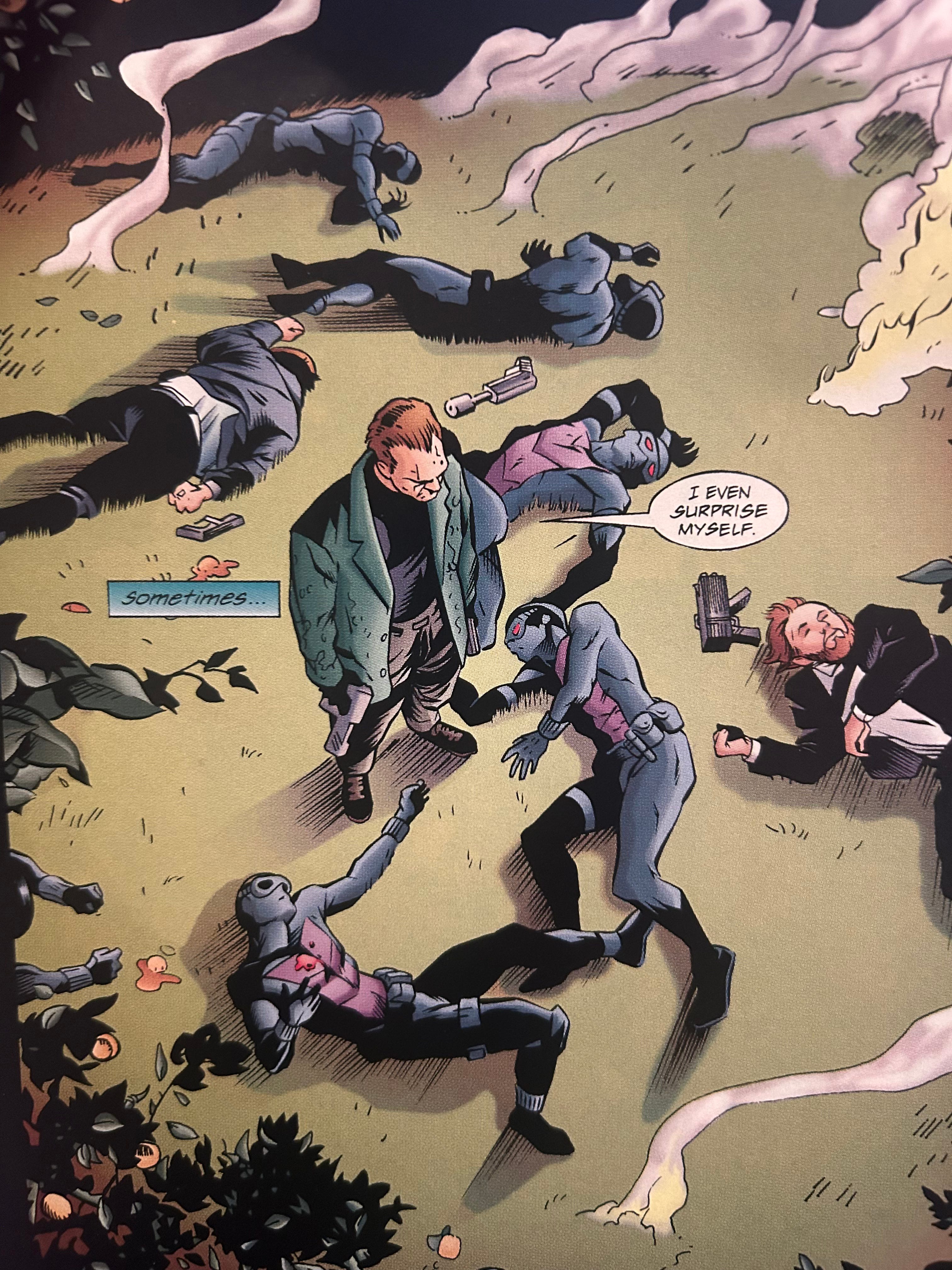
Originally written by James Robinson with art by Cully Hamner and covers by Howard Chaykin, Firearm was an Ultraverse book, but in a different way. Alec Swan is a British private investigator living in Pasadena, California. He specializes in cases dealing with Ultras (super powered individuals), but he is not an ultra. He also hates being called Firearm. Firearm was his codename when he worked for The Lodge, a government agency in England that performed covert operations.
Similarities to Starman
I’m not saying Starman is a ripoff of Firearm. Not at all. They share some traits that are more of a James Robinson thing than an act of plagiarism. A main theme in the beginning of both books are reluctant heroes. Alec Swan doesn’t want to be called Firearm, hates working cases involving Ultras, and just wants to be left alone. Jack Knight swears he isn’t the new Starman, tries his best to avoid doing anything heroic, and simply wants to be left alone to run his antiques and collectables store. (Don’t call it a junk shop.)


Firearm takes place in the very real city of Pasadena, California. Starman takes place in the very not real city of Opal City. It is implied that Opal City is an east coast city, so we can’t make comparisons there, but both cities are referenced in more detail than a story that takes place in Gotham or Metropolis. As someone that has spent a few days in Pasadena, I can appreciate the fact that several real life landmarks are referenced. I can’t tell if Robinson lived there in the 90s or just appreciated the feel of the Old Town area of the city. A love of Opal City is what unites several characters in Starman, which was expanded on greatly in the title’s 81 issues. Opal by the way, also has an Old Town.
Another similarity in both books is Robinson’s love of dialogue that had a real feel to it. Most of the time. I’ve never met a person that says “…errrr” when talking, but I do appreciate the almost ADHD aspect of his writing. Yes, the dialogue advances the plot, but he also drops some tidbits about what the main characters would rather be doing at the moment, what their favorite food or drink is, and what woman was on their mind as well.
The final thing that these books share? The letter column. See kids, back in the day, you could write a letter to the editor of the book you liked and if they wanted to, they would print your letter in the back of the comic. Nowadays, you only see letter columns in Savage Dragon and maybe Powers. In Firearm and Starman, James Robinson eventually takes over letter column duties, using it in Starman to add more depth to the character of Shade.
Minor Dislikes
I wanted to acknowledge the minor issues I had with the book. I try my best to point out the things I enjoy in a book, because life is too short to waste energy shitting on something. If I don’t like it, I’m not writing about it. But here are a few things about Firearm that made it a 7/10 when it could have been more of a 9/10. First of all, the overall look of Alec Swan is inconsistent. Hamner is the penciller on 7 of the first 9 issues, and then after that we get the artist shuffle every few issues. Sometimes Swan has an extremely messed up face, other times he has the giant scar down one eye.
When I said I had minor issues, I really mean minor, because we are about to talk about lettering. The lettering is inconsistent and doesn’t look good until Annie Parkhouse takes over in issue #10. Swan is the narrator of the book, so his captions look like journal writing, but the dialogue doesn’t look good until Parkhouse.
Overall Thoughts
My first impression of Firearm is that I really wanted to like the book. As soon as I got over the minor dislikes I had, I actually enjoyed the book. Unfortunately, there were only 19 issues of the book so it only took me two days to get through the book.
I enjoyed Swan’s attitude of just wanting to stay home, drink tea, and be left alone. After a very rough couple of issues of being hunted by some rich Ultras, all he wants to do is go home and sleep. This leads to the most talked about issue that I know of, and the one that stood out to me. In issue #5, Swan has to talk an Ultra with wings out of jumping off of the top of a building because she doesn’t like the way she looks. It’s a very dialogue heavy, light on action issue, and that’s a good thing. The usually gruff Swan shows a softer side and saves the day, even when he just wants to go home.
There is also a fantastic story about The Lodge calling a favor in which requires Swan to send his consciousness into….the internet (aka cyberspace). Swan gets shot to pieces in issue #10 but is put back together at the beginning of issue #11. Apparently you can die in cyberspace and survive, but if you stay in there too long, you can’t come back to the real world. (Insert Hotel California reference here.) It’s so funny to think about the existence of the internet in 1994 and how it is portrayed in comics.
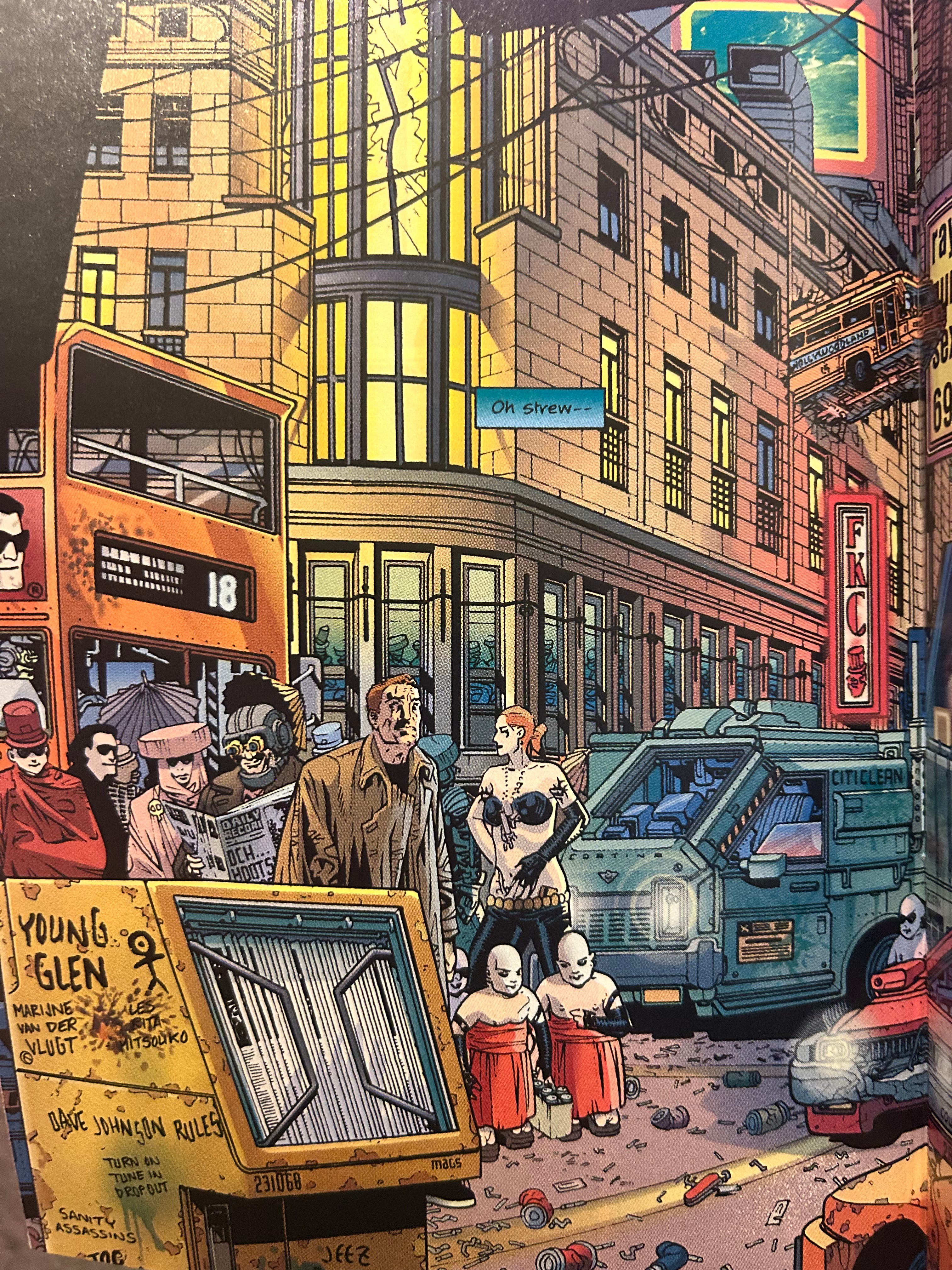
The book does the best it can while being a part of a shared universe. Much like Starman, participation is sometimes required in crossovers and big events. There is a crossover with Prime. The Night Man and everyone else show up in the final storyline of the book, focusing on a man that is attempting to kill all the Ultras and Swan too. Ultimately, the book wraps up at a logical point, and Robinson bows out.
Eventually, Malibu is purchased by Marvel and the Ultraverse characters start to interact with and become part of the Marvel Universe. As for Firearm, there was a spinoff titled Codename: Firearm that features a new character and has Alec Swan backup stories. It lasted 6 issues. Is the spinoff good? No. Is it nice to have a few more pages of Swan? Yes.
So is the book worth reading? Absolutely. I’m positive that you can pick this up at your local shop on the cheap. I was able to get the entire series, 4 of which have Cully Hamner signatures, plus the spinoff for $32 on eBay. If you are fan of James Robinson and enjoyed Starman, add this to your list and see what you think about the Proto-Starman.
Social Media
If you want to, you can follow me on social media. Search timelinepunch Instagram, BlueSky, and Threads accounts. Threads is where I post most often lately. Here is a link to my conversation with Matthew L. Price, where Firearm was brought up when we started talking about Starman.
Next week: More of the DC In My Lifetime series. I’m reading as many DC Comics from July 1980 (when I was born) to December 1992 (when I started reading comics) as I can. We are about to close out 1980, and I’m looking forward to what is next. Take care, everyone. I’ll catch you on the flippity flip.
Your friend on the internet,
-Jarrod